
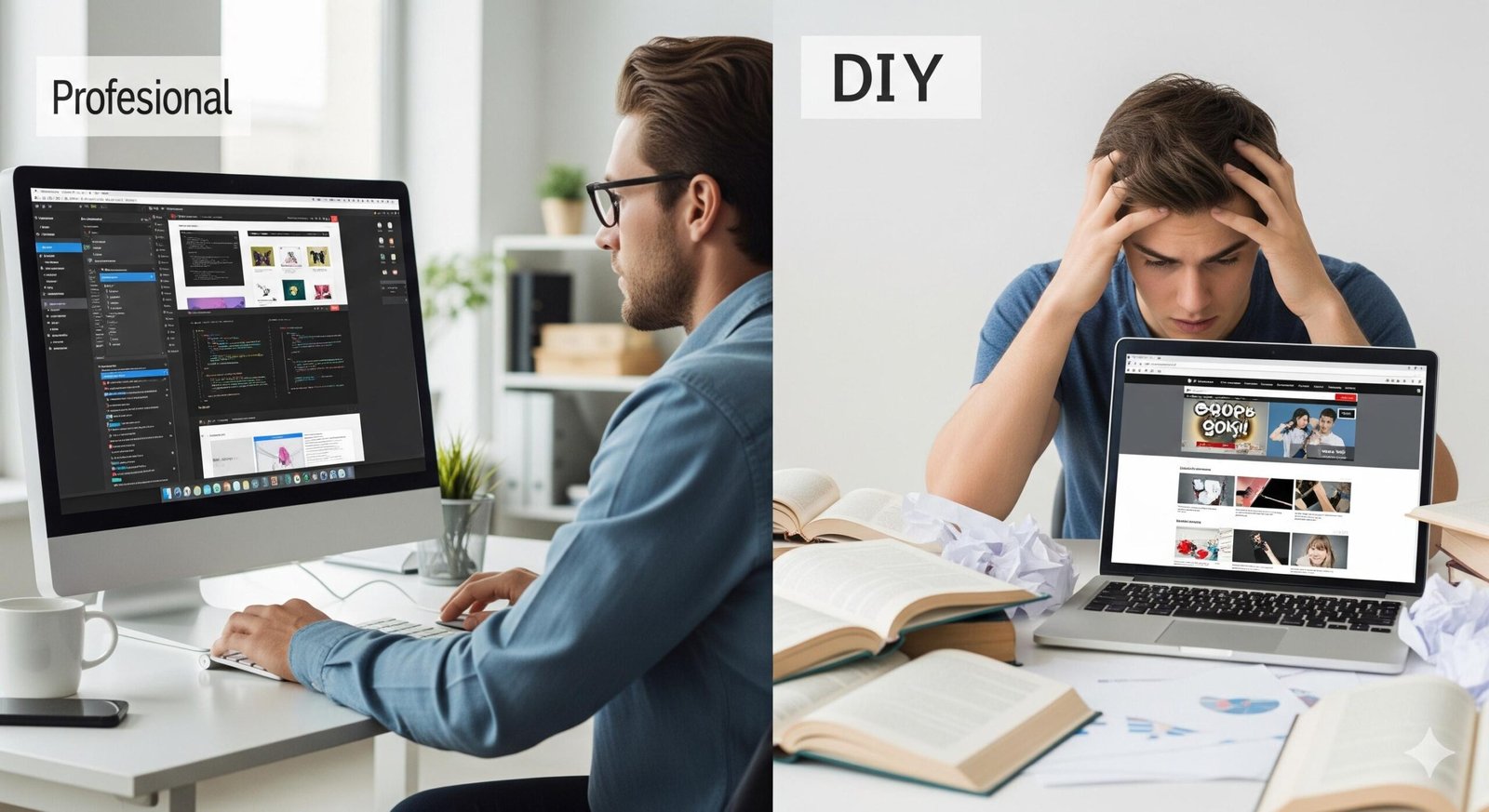
DIY Website Builders vs. Hiring a Web Development Agency: Which Is Right for Your Business?
Building a website is one of the first steps towards establishing a strong online presence. Whether you’re launching a startup, running a small business, or expanding an established company, having a professional website helps customers discover your services, understand your offerings, and connect with your business.
Today, creating a website is easier than ever. Platforms like Wix, Squarespace, and WordPress.com allow business owners to build websites without extensive coding knowledge. These DIY website builders offer ready-made templates, drag-and-drop editors, and affordable plans.
However, as a business grows, its website requirements may become more complex. Custom functionality, eCommerce integrations, search engine optimization (SEO), website performance, and ongoing technical support can require more than a basic website builder can offer.
This brings business owners to an important question: Should you build your own website using a DIY platform, or hire a professional web development agency?
The right choice depends on your business goals, budget, technical knowledge, and long-term requirements. Let’s explore both options.
1. What Are DIY Website Builders?
DIY (Do-It-Yourself) website builders are online platforms that allow users to create websites without needing professional developers. They provide pre-designed templates, visual editing tools, hosting options, and built-in features to simplify the website creation process.
Popular examples include:
Wix: Offers drag-and-drop website creation with customizable templates.
Squarespace: Known for visually appealing designs and built-in business tools.
WordPress: Provides flexibility through themes, plugins, and customization options. Its capabilities depend on the version, hosting arrangement, and technical setup.
Shopify: Designed primarily for businesses that want to create and manage online stores.
These platforms are particularly useful for individuals, freelancers, and small businesses that need a basic online presence without investing heavily in development.
Advantages of DIY Website Builders
1. Lower Initial Cost
DIY platforms generally have lower upfront costs than hiring a professional agency. Many offer affordable monthly or annual plans, making them accessible to startups and businesses with limited budgets.
2. Easy to Use
Most website builders provide visual editors that allow users to add text, images, buttons, forms, and other elements without writing code.
3. Faster Website Creation
With ready-made templates, businesses can create a simple website relatively quickly. This can be useful when launching a new business or testing an idea.
4. Direct Content Management
Business owners can independently update website content, change images, publish blogs, and make basic design adjustments without depending on a developer.
Limitations of DIY Website Builders
Despite their convenience, DIY platforms have certain limitations.
Limited customization: Some advanced design and functionality requirements may not be possible without additional plugins, custom code, or platform-specific development.
Technical challenges: Website speed, security, integrations, and troubleshooting may become difficult without technical knowledge.
SEO limitations: Most platforms provide basic SEO tools, but achieving strong search visibility still requires technical optimization, content planning, and ongoing work.
Scalability concerns: As business requirements grow, managing complex features and integrations may become more challenging.
Time investment: Building and maintaining a website yourself requires time that could otherwise be spent managing your business.
A DIY website may be a good starting point, but it is important to consider whether it can support your business as it develops.
2. What Does Hiring a Web Development Agency Mean?
A professional web development agency works with businesses to plan, design, develop, and maintain websites based on their specific requirements.
Unlike template-based website creation, professional development focuses on understanding the business, its target audience, and the purpose of the website before deciding how it should be built.
An agency can help with everything from creating a simple business website to developing a customized eCommerce platform with multiple integrations.
For example, at Website Desks, website development is approached with a focus on usability, business requirements, and long-term functionality. Services include business websites, eCommerce stores, redesigns, landing pages, and integrations with compatible business tools.
Advantages of Hiring a Web Development Agency
1. Customized Website Design
A professional agency can create a website that reflects your brand identity, business goals, and customer expectations.
Instead of relying entirely on standard templates, the design can be planned around your products, services, and customer journey.
2. Better User Experience
A website should do more than look attractive. Visitors should be able to find information, explore services, and contact your business without unnecessary effort.
Professional developers consider navigation, mobile responsiveness, page structure, and accessibility when building a website.
3. Advanced Functionality and Integrations
As businesses grow, they may need features such as online payments, booking systems, inventory management, customer relationship management (CRM), and automated inquiry handling.
A development agency can help integrate compatible tools and build functionality around these requirements.
For businesses exploring connected digital solutions, Website Desks’ website design and development services include eCommerce, payment and shipping setup, CRM integrations, and website redesigns.
4. SEO and Website Performance
A professionally developed website can be structured with search engine visibility and performance in mind.
This may include:
Search-friendly website architecture.
Mobile-responsive layouts.
Optimized images and page resources.
Proper heading structures and metadata.
Technical SEO considerations.
Clear navigation and internal linking.
However, website development alone does not guarantee higher search rankings. SEO requires consistent optimization, relevant content, and ongoing improvements.
5. Ongoing Maintenance and Technical Support
Websites require regular updates, security checks, backups, performance monitoring, and occasional troubleshooting.
Working with an agency can provide access to technical assistance when issues arise. This is particularly useful for businesses that do not have an in-house technical team.
Explore Website Hosting and Managed Web Solutions to learn more about the technical support available through Website Desks.
Potential Considerations
Hiring an agency also involves certain considerations:
Higher initial investment: Professional development generally costs more upfront than using a DIY builder.
Development time: A customized website may require planning, design reviews, development, and testing.
Communication: Businesses need to communicate their requirements clearly and participate in the development process.
Project scope: Additional features and changes outside the agreed scope may increase the cost and timeline.
The investment can make sense when the website plays an important role in generating leads, selling products, or supporting everyday business operations.
3. DIY Website Builders vs. Web Development Agencies: A Side-by-Side Comparison
Both approaches have their advantages. The difference lies in how much flexibility, customization, and technical involvement your business requires.
| Factor | DIY Website Builder | Web Development Agency |
|---|---|---|
| Initial cost | Generally lower | Generally higher |
| Ease of use | Beginner-friendly | Agency handles technical development |
| Design | Templates and customization | Tailored to business requirements |
| Development time | Often quicker for simple sites | Depends on project complexity |
| Custom functionality | Platform-dependent | More flexibility |
| eCommerce | Built-in or app-based features | Customized store and integrations |
| SEO | Basic tools available | Technical setup and SEO planning |
| Scalability | Depends on platform | Can be planned around growth |
| Maintenance | Mostly self-managed or platform-supported | Can include professional support |
| Technical expertise | Basic knowledge may be sufficient | Access to development expertise |
The important distinction: DIY builders prioritize convenience and ease of setup, while professional agencies offer more control over the design, functionality, and technical direction of a website.
4. When Should You Choose a DIY Website Builder?
A DIY website builder can be the right choice if your website requirements are relatively simple.
Consider this option if:
You are starting a personal blog or portfolio.
You run a small business that only needs basic service and contact pages.
You have a limited initial budget.
You are comfortable managing website updates yourself.
You do not require advanced integrations or custom functionality.
You want to test a business idea before investing in a larger website.
For example, a freelance photographer may only need a website displaying a portfolio, contact details, and a booking inquiry form. A DIY platform could be sufficient for these requirements.
The key is to choose a platform that meets your current needs without making future changes unnecessarily difficult.
5. When Should You Hire a Web Development Agency?
A professional web development agency becomes a stronger option when your website needs to support important business activities.
Consider hiring an agency if:
Your Business Needs a Unique Brand Experience
If your website is a major part of your brand identity, a customized design can help create a more consistent and professional experience.
You Want to Sell Products Online
An eCommerce website may require product catalogues, shopping carts, payment gateways, shipping integrations, inventory management, and order notifications. An agency can help connect these components into a functional online store.
You Need Custom Features
If your business requires booking systems, customer portals, interactive tools, or integrations with existing software, professional development can help address those requirements.
You Want to Improve Search Visibility
If attracting organic traffic is a priority, your website needs a solid technical foundation alongside a consistent SEO strategy.
You Don’t Have Time to Manage Technical Tasks
Running a business already involves managing customers, employees, operations, and marketing. Outsourcing website development and maintenance can reduce the technical workload.
For businesses looking to combine their website with broader digital solutions, Website Desks also offers digital marketing and SEO-related services to help improve online visibility.
6. What About the Cost? Is Hiring an Agency Worth It?
Cost is often the biggest factor when deciding between a DIY website builder and a professional agency.
A DIY website may appear less expensive initially because many platforms offer affordable subscriptions. However, the total cost can include:
Monthly or annual platform subscriptions.
Premium themes and templates.
Paid plugins and extensions.
Third-party integrations.
Additional storage or functionality.
Your own time spent building and maintaining the website.
On the other hand, hiring an agency generally involves a higher initial investment. The final cost depends on the number of pages, design requirements, integrations, functionality, and ongoing support.
However, the value of a website should not be measured by its development cost alone.
A well-planned website can support customer inquiries, improve brand credibility, simplify product discovery, and create opportunities for online sales.
For example, an eCommerce business may benefit from an integrated website that connects product listings, payments, shipping, and customer notifications rather than managing each process separately.
The better question is not simply, “Which option is cheaper?” but rather, “Which option delivers the functionality and value my business needs?”
7. Can You Start with a DIY Website and Hire an Agency Later?
Absolutely. Choosing a DIY website builder does not mean you can never work with a professional agency.
Many businesses start with a basic website and upgrade as their requirements change.
For instance, you may initially create a website using WordPress or Wix to display your services and contact information. As your business grows, you may need:
A redesigned website that better represents your brand.
More advanced eCommerce functionality.
CRM integration to organize customer inquiries.
AI-powered chatbots to answer common questions.
Automated workflows for lead management.
Improved website performance and SEO.
At this stage, working with a professional agency can help you move beyond the limitations of your existing setup.
You may not even need to rebuild everything from scratch. Depending on your current platform and website structure, an agency may be able to improve, redesign, or extend your existing website.
The important thing is to plan for future requirements rather than choosing a solution based only on today’s needs.
8. Making the Right Choice for Your Business
There is no universal answer to whether a DIY website builder or a professional web development agency is better.
Both options serve different purposes.
If you need a simple website, have the time to manage it, and want to keep initial expenses low, a DIY website builder may be the practical choice.
However, if your website needs to represent your brand professionally, support complex functionality, integrate with business systems, or contribute directly to customer acquisition, hiring a web development agency may be a better long-term investment.
Before making a decision, consider these questions:
What do I want my website to achieve?
Who is my target audience?
Will I need eCommerce, booking, or custom functionality?
Do I have the time and technical knowledge to manage the website?
Will my website requirements change as my business grows?
Do I need professional support for hosting, maintenance, and SEO?
Your answers will help you identify the approach that best fits your business.
Conclusion: Build a Website That Grows with Your Business
Your website is more than just an online address. It is an important part of how customers discover your business, understand your services, and decide whether to work with you.
DIY website builders offer an accessible way to establish an online presence, while professional web development agencies provide the expertise and flexibility needed for more customized business requirements.
The best choice is the one that supports your business goals, fits your budget, and gives your customers a better online experience.
At Website Desks, we help businesses create practical digital experiences through website design and development, eCommerce solutions, SEO, hosting, and connected business tools.
Whether you are planning your first website or looking to improve an existing one, we’re here to help you take the next step.
Ready to build a website that works for your business?
Explore Website Desks’ website development services or get in touch with our team to discuss your project.